Things Putting a Million Dollars on a Credit Card Can Do for You
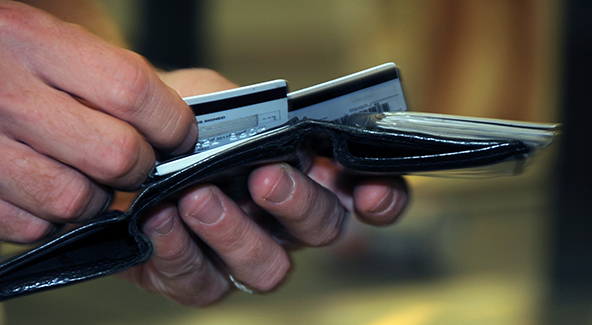
Buried in my news feed this morning was a Wall Street Journal piece, which should have been more prominently featured (I hope Google is paying attention). In it, AnnaMaria Andriotis—the author—tells us about things people do to get the most out of their credit card rewards programs. It is, as some readers might notice, a favorite topic of mine, although I’ve never got myself to dedicating a full article to the issue.
In the past, the main—perhaps the only—trigger to prompt me to touch on the issue has been an article in which the author did his or her best to scare people from using their credit cards. Typically, the stated reason was some villainous card issuer scheme to ensnare cardholders into a debt trap, usually through sneaky interest rates, but other stratagems have also been divined. Looking back, I’ve given such commentators much more attention than they deserved. In the real world, the CARD Act of 2009 provided Americans with solid protection against abusive credit card practices, while at the same time ensuring that cardholders get easy access to information about their credit card agreements.
Refreshingly, Andriotis doesn’t attempt to drive people away from credit cards. Instead, she tells a similar story to mine—using credit cards can actually make you money—but the scale is more ambitious. However, in the process, she does manage to make some dubious assertions, which need addressing. Let’s get to it.
Putting a Million Dollars on a Credit Card
That is precisely what one of the protagonists of Andriotis’ piece has done over the course of four years. And for good reason. Here is the story:
Greg Cave says he has put over $1 million on his American Express AXP +1.07% card over the past four years to pay for a kitchen remodel, landscaping and a customized lighting system for his home in Parker, Texas. Mr. Cave, a 48-year-old owner of a computer-consulting firm, says he pays credit-card balances in full every month while earning points, which he and his partner have redeemed for trips. Earlier this month they took a weeklong vacation in St. Thomas that was paid for by some of those points. “If I’m just going to write a check at the end of the month, why not get those extra points?”
It does make perfect sense. As Andriotis herself notes, cardholders are “already spending money on renovations”, so why not “get something extra in return—a perk that cash doesn’t offer”? Why not, indeed?
Now, the usual caveat applies: in order for this strategy to work, the cardholder must repay the full balance at the end of the month, every month! But for as long as you do that, you will be solidly in the black. Otherwise, interest rates begin to apply and the picture becomes ugly. Then again, you should be paying off your credit card balances in full anyway, it’s just common sense.
On Credit Card Processing Fees
Now on to the dubious assertions. The first one is Andriotis’ statement that “[w]hen cardholders swipe their credit cards, card issuers charge merchants a fee, which often ranges from 2.5% to 3.5% of the transaction amount”. That statement is wrong and a WSJ reporter should not have made it. The higher end of Andriotis’ range is correct, but only if it is applied to American Express transactions and then only to certain merchant types, for example restaurants and hotels. Other merchant types, like gas stations and supermarkets, pay lower fees for AmEx transactions, and all pay lower Visa and MasterCard fees.
Moreover, said supermarkets pay processing fees to American Express at a lower rate—2.30 percent—than the one at the lower end of Andriotis’ range—2.50 percent. Moreover, when you look at Visa and MasterCard, the lower end of the range goes lower still. For example, the fee charged by card issuers for transactions involving plain vanilla Visa credit card is 1.51 percent plus $0.10 per swiped transaction and the one for that card’s rewards counterpart is 1.65 percent plus $0.10. Even when you add the processor’s surcharge (which Andriotis is not doing in her example), the total will be well below the 2.50-percent level.
On Credit Scores
The other problematic statement concerns credit scores:
If the amount charged is greater than 1% of the cardholder’s total credit limit, there will be some negative impact on his or her score.
Whereas the transaction fee assertion was merely inaccurate, the credit score one is laughable. Again, it is not entirely fallacious, but it is nevertheless completely wrongheaded. So credit utilization—the ratio of used to available credit—is indeed a major component of your credit score. Other things equal, the more credit you use, the lower your credit score. However, to say that using one percent of your total credit line would produce negative impact on your credit score is ludicrous. Even if the algorithm causes the cardholder’s credit score to fall by a single point—and that is a big “if”—such “impact” will be transient and can be negated by the slightest of effects produced by one of the other factors taken into account when computing the score.
Not to mention that one point more or less makes no difference in practice. For perspective, it is generally recommended that credit utilization is kept below thirty percent of both each individual account and of your aggregate credit across all accounts. And anyway, just think about how much one percent of your available credit actually amounts to. Let’s say that you have a card with a credit line of $15,000. In this case, one percent amounts to a grand total of $150! Let’s take this a step further and assume that your combined credit line across all of your cards is $65,000—one percent amounts to $650! It is amazing that anyone should make such a statement.
The Takeaway
On balance, Andriotis’ piece does more good than harm, I think. Cardholders can and do make money just by using their credit cards and Andriotis does a good job telling one such story. All that is required to take advantage of your rewards program is common sense. However, the author has done a poor job in her reporting on the processing fees and, especially, on the credit score issue. She could and should have done much better on both counts.
Image credit: Wikimedia Commons.
Google Turns Credit Card Issuer
PayPal Here vs. Square: What’s the Difference?
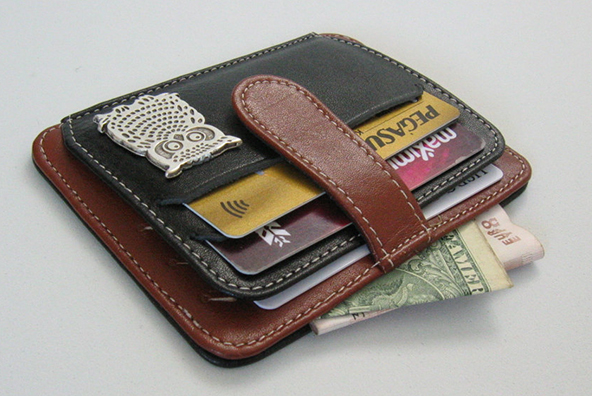
Using points to earn retirement perks is a good idea, but people need to be careful in how they manage this strategy. A good way to start is to create a formal strategy for how credit cards are used and how payments are to be to made to maximize the benefits of the points and cash back programs, while minimizing added expenses like interest and fees. Paying off the entire balance every other week is a way to earn points and to keep from accidentally incurring interest charges.