Minimizing Key-Entered Transactions
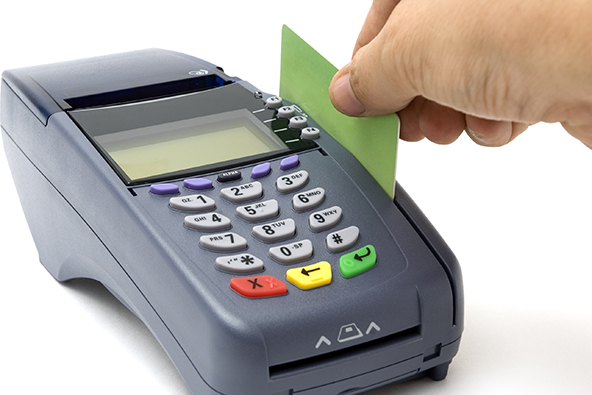
Merchants operating physical stores have the advantage of accepting payments in a face-to-face environment, which is typically associated with lower levels of fraud and chargebacks. Consequently, card-swiped transactions are processed at the lowest interchange rates by the credit card networks. Key-entered transactions, however, are different. Although fully acceptable, key-entered transactions are associated with higher fraud and chargeback rates, mostly because some special security features — such as the expiration date and the card security codes — are not available.
Merchants key-enter transactions when the point-of-sale (POS) terminal is down or cannot read the card’s magnetic stripe or perform an authorization. There can be several reasons why the card’s stripe cannot be read, but it is usually because the terminal’s magnetic-stripe reader is not working properly, the card is not being swiped through the reader correctly, or the magnetic stripe on the card has been damaged or demagnetized.
It is important to estimate the percentage of key-entered transactions compared to total transactions to help you identify which stores, terminals, or sales associates have high key-entry rates. In order to do that, divide the total number of key-entered transactions for a certain period (a month or a quarter) by the total number of sales. If your business is processing mail order and telephone order transactions, exclude them from both totals. To represent the result as a percentage, multiply it by 100. To determine the key-entered rate for each associate, repeat the process for each terminal and each sales shift.
Now that you have calculated your business’ overall and per-associate key-entered transaction rates, you can begin your evaluation. Where key-entered transactions exceed one percent of total transactions, you should investigate the situation, identify the issue and take adequate corrective measures. Following is a list of the most common reasons for high rates of key-entered transactions and possible solutions at the point of sale:
- Damaged magnetic stripe reader. Check your magnetic stripe readers regularly to make sure they are working properly.
- Dirty magnetic stripe readers. Clean your magnetic stripe reader heads several times a year to ensure they remain in a good working condition.
- Magnetic stripe reader obstructions. Remove all obstructions near the magnetic stripe reader. Electric cords or other equipment could prevent a card from being swiped straight through the reader.
- Spilled food or drink. Remove all food or beverages near the magnetic stripe. Falling crumbs or an unexpected spill could soil or damage the terminals.
- Anti-theft devices that damage magnetic stripes. Keep magnetic anti-theft deactivation devices away from any counter area where customers might place their cards. These devices can erase a card’s magnetic stripe.
- Improper card swiping.
- Swipe the card once in one direction, using a quick, smooth motion.
- Never swipe a card back and forth.
- Never swipe a card at an angle; this may cause a faulty reading.
Whenever you have to key-enter transactions, make an imprint of the card (the same best practice applies to voice-authorized transactions). The imprint proves that the card was present at the point of sale and protects your business from a potential chargeback in case of a fraudulent transaction. You can make the imprint either on the sales receipt, generated by the terminal, or on a separate manual sales receipt, signed by the customer.
Image credit: Timesunion.com.
American Express Chargeback Reason Codes and Procedures
Credit Card Companies Beef Up Their E-Commerce Presence